When we hear the word “intelligence,” we often think of problem-solving, academic achievement, or technological innovation. In today’s world, conversations about intelligence frequently revolve around Artificial Intelligence and the remarkable capabilities of machines. Yet there is another form of intelligence that receives far less attention despite being responsible for sustaining every moment of human life.
Long before humans developed language, built civilizations, or created computers, nature had already engineered a sophisticated intelligence system. It exists within each of us, quietly coordinating countless biological functions without requiring conscious thought. In Evolving Human Intelligence: What to Expect Next, authors Kushlan Nagodawithana and Tilak Nagodawithana describe this remarkable phenomenon as innate intelligence, the built-in biological wisdom that keeps us alive.
Intelligence Before Conscious Thought
Human intelligence did not appear overnight. It emerged through millions of years of evolution, shaped by natural selection and adaptation. While modern humans often celebrate intellectual achievements, the foundation of intelligence may lie much deeper within our biology.
Innate intelligence refers to the hardwired instructions embedded within every living organism. Unlike learned knowledge, it requires no education, training, or conscious effort. From the moment life begins, these biological systems guide development, maintain balance, and support survival. This hidden intelligence operates continuously, whether we are awake or asleep.
The Trillions of Conversations Happening Inside You
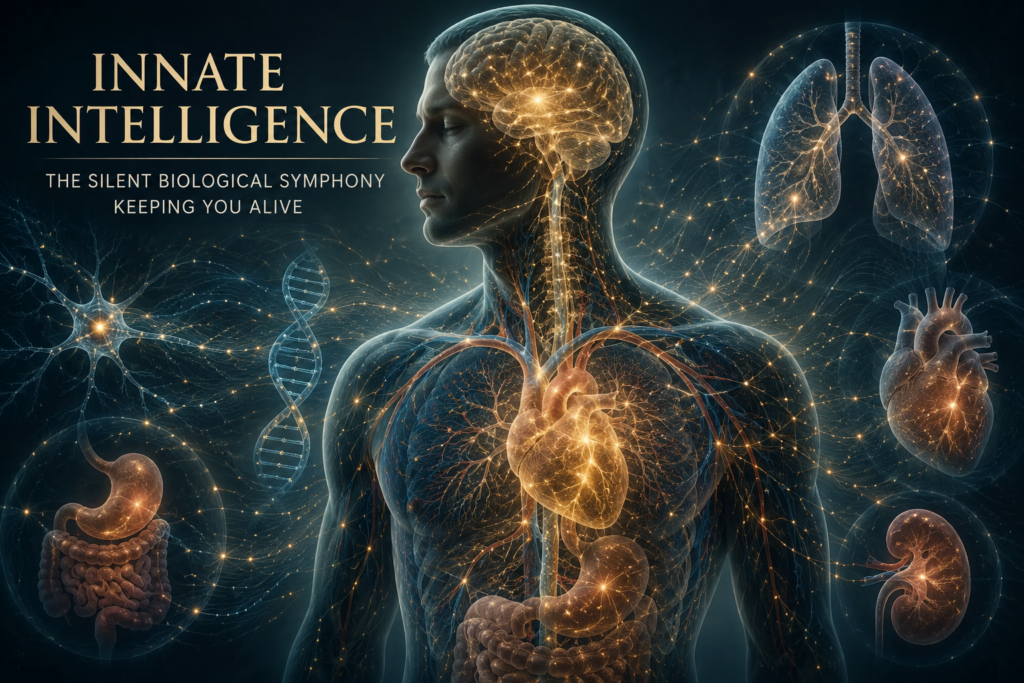
At any given moment, trillions of cells throughout the body are communicating with one another. These microscopic interactions form a vast network that coordinates essential life functions. Your lungs automatically regulate oxygen intake. Your heart adjusts its rhythm according to your body’s needs. Your digestive system processes nutrients while your kidneys filter waste. None of these activities requires conscious instructions.
This constant exchange of information allows the body to function as a unified system. What appears effortless on the surface is actually the result of extraordinary biological coordination occurring every second.
The Body’s Built-In Defense System
One of the most fascinating aspects of innate intelligence is its role in protecting the body from harm. The immune system continuously monitors for viruses, bacteria, and abnormal cells. Long before symptoms appear, specialized defense mechanisms are working to identify and eliminate potential threats.
The book highlights how innate intelligence contributes to early cancer defense by helping the body’s natural immune responses recognize and respond to abnormal cellular activity. These protective processes often occur without our awareness, demonstrating the body’s remarkable ability to preserve health through deeply embedded biological programming.
The Nervous System: Nature’s Communication Network
Central to innate intelligence is the nervous system. Acting as the body’s communication highway, it connects organs, tissues, and cells through an intricate web of signals. When you touch a hot surface, your hand withdraws almost instantly. When your body needs more oxygen during physical activity, multiple systems adjust automatically to meet demand. These rapid responses reveal a level of intelligence that operates far beyond conscious decision-making.
This biological communication network has evolved over millions of years, allowing humans to survive, adapt, and thrive in changing environments.
Rethinking What Intelligence Really Means
As society races toward increasingly advanced forms of Artificial Intelligence, Evolving Human Intelligence: What to Expect Next invites readers to consider a deeper question: What if the most extraordinary intelligence is already within us?
The body’s ability to regulate itself, defend against disease, repair damage, and coordinate trillions of cellular interactions represents one of nature’s greatest achievements. It is a silent biological symphony that has supported human life since the earliest stages of evolution. Understanding innate intelligence not only helps us appreciate the complexity of the human body but also provides valuable insight into the broader story of human evolution and the future of intelligence itself. To explore these ideas further, Evolving Human Intelligence: What to Expect Next offers a fascinating journey through biology, neuroscience, technology, and the forces that continue to shape humanity’s future