What If The Next Chapter Of Human Evolution Isn’t Written By Nature Alone?
Close your eyes and picture a child born a hundred years from now.
Will they inherit the same strengths and weaknesses we do today? Will their intelligence develop through the slow rhythm of evolution, or will it be shaped by technologies that don’t yet exist? More importantly, will future generations still rely on nature to adapt, or will humanity begin designing its own future?
These questions once belonged to science fiction. Today, they sit at the center of scientific debate.
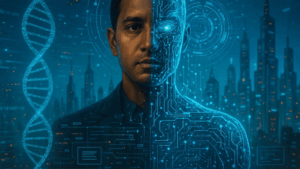
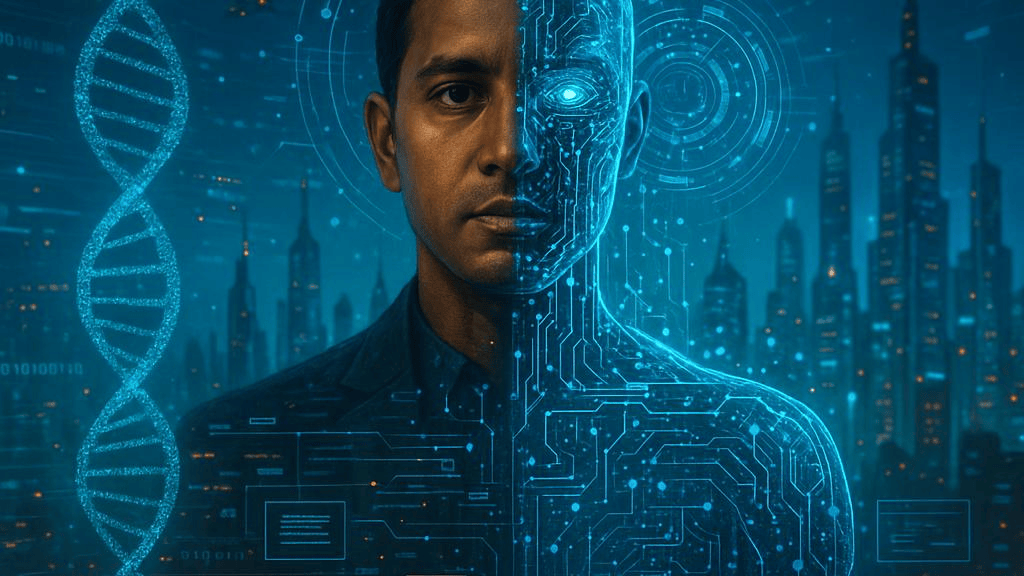
For nearly 3.5 billion years, evolution followed one simple rule: adapt or disappear. Every successful trait, from stronger muscles to larger brains, was earned through countless generations responding to changing environments. But humanity has reached a remarkable turning point. Instead of waiting for evolution to solve tomorrow’s challenges, we are building technologies that may influence the process itself. Evolving Human Intelligence: What to Expect Next explores this fascinating crossroads, asking readers to consider whether the future human will be shaped by biology, innovation, or a combination of both.
Nature Has Never Stopped Working
Many people believe evolution belongs to the distant past. We picture prehistoric hunters, ancient forests, and survival against wild predators. It feels as though modern medicine and technology have ended nature’s influence on humanity.
The book argues otherwise. Evolution has never taken a break. It has simply found new challenges to respond to. Climate change, urban lifestyles, shifting diets, pollution, and global connectivity are creating environments unlike anything our ancestors experienced. These forces may become tomorrow’s selective pressures, quietly influencing future generations in ways we cannot yet fully measure.
Human evolution isn’t frozen in time. It’s adapting to an entirely different world.
The Most Powerful Intelligence Is the One You Never Notice
Long before artificial intelligence entered the conversation, another extraordinary intelligence had already been at work. It’s inside you. Every second, trillions of cells communicate without asking for permission. Your heart adjusts its rhythm. Your lungs regulate oxygen. Your immune system searches for threats. Damaged tissues begin repairing themselves. None of these life-sustaining processes require conscious thought.
The authors describe this remarkable biological coordination as innate intelligence, an invisible system that has quietly protected life since birth. It reminds us that intelligence isn’t limited to reasoning or solving equations. Sometimes, intelligence is simply knowing how to stay alive.
As impressive as modern technology has become, nature still performs billions of complex calculations inside the human body every moment.
Technology Is Changing the Rules of Evolution
For thousands of generations, evolution moved at nature’s pace. Technology moves much faster. Artificial intelligence now analyzes medical images, assists researchers, improves transportation, powers communication, and helps solve problems that once required enormous teams of specialists. At the same time, advances in genetics are opening discussions that previous generations could scarcely imagine.
Instead of waiting centuries for beneficial traits to spread naturally, scientists are beginning to explore ways to influence genetic outcomes directly. The possibility of reducing inherited diseases, improving health, or even slowing aspects of aging introduces a future where biology and technology work side by side.
For the first time in history, humanity isn’t simply experiencing evolution. It may eventually participate in directing it.
Every Breakthrough Carries a Responsibility
Progress often captures headlines. Its consequences usually arrive more quietly. Artificial intelligence depends on enormous computing facilities capable of processing unimaginable amounts of data. These data centers require electricity around the clock, sophisticated cooling systems, and significant water resources. As AI expands, communities are beginning to question how much environmental cost society is willing to accept in exchange for technological convenience.
The workplace is also entering unfamiliar territory. As automation becomes more capable, many traditional careers may evolve faster than education systems can prepare future workers. Some jobs will disappear, while entirely new professions will emerge. The challenge is not simply replacing human labor but preparing people to work alongside increasingly intelligent technologies. Innovation without preparation rarely benefits everyone equally.
The Future Doesn’t Need to Choose Sides
The conversation is often framed as a contest.
- Nature versus technology.
- Human intelligence versus artificial intelligence.
- Old evolution versus new innovation.
But perhaps this is the wrong question.
Nature has spent millions of years refining resilience, creativity, emotional understanding, and biological balance. Technology offers speed, precision, scalability, and the ability to solve problems that once seemed impossible. Neither replaces the other. Together, they could create opportunities neither could achieve alone.
The book repeatedly emphasizes that technological progress should remain guided by ethics, responsible leadership, and thoughtful regulation. Innovation should strengthen humanity rather than weaken the social and environmental foundations that support it.
The Evolution We Choose
For centuries, humans wondered where evolution would take us. Today, a different question demands our attention.
Where will we choose to take evolution?
The future human may inherit stronger medicine, smarter machines, cleaner technologies, and greater scientific knowledge than any previous generation. Yet none of these achievements will define our success on their own. The real measure of progress will be whether wisdom grows alongside intelligence.
Evolving Human Intelligence: What to Expect Next invites readers to look beyond today’s technological headlines and consider the bigger picture. Human evolution is no longer only a story written by nature. It is becoming a shared story, one shaped by biology, innovation, ethics, and the choices we make today for generations that have not yet been born.
As technology continues to expand the limits of what humanity can achieve, one question remains unanswered: Will we simply build a smarter future, or will we build a wiser one?